
Burst pipe emergency: what to do in the first 10 minutes
By Julian Fischer · Updated 2026-09-02
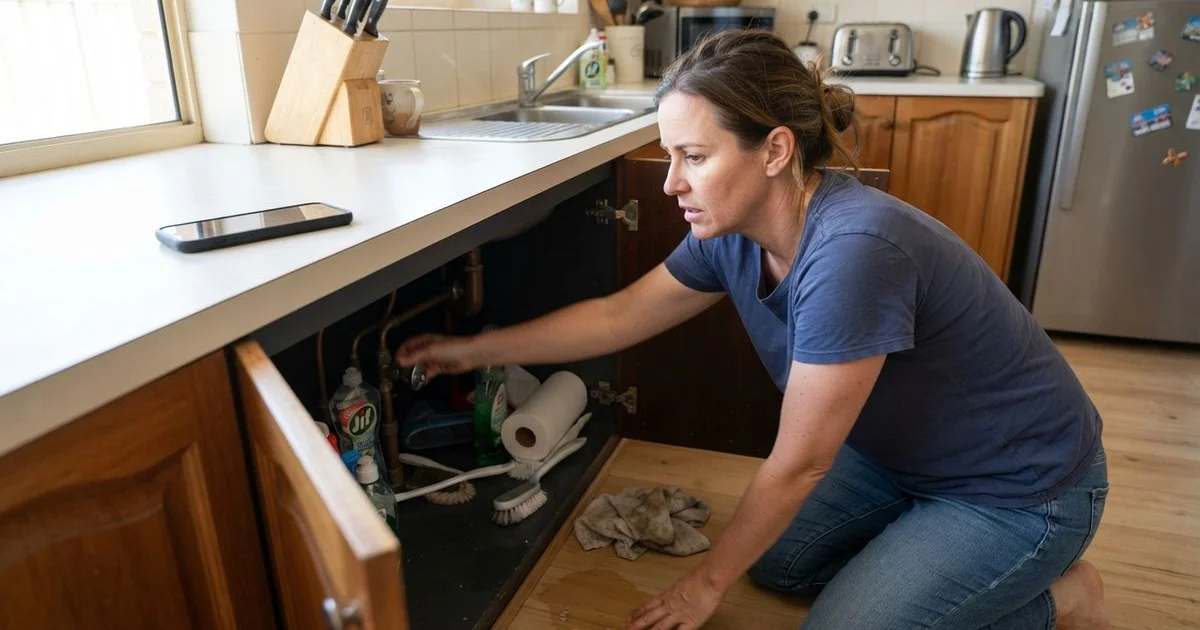
A burst pipe turns a normal afternoon into a race against the clock. Water finds its way into walls, flooring and ceilings fast, and every extra minute before the flow stops adds to the damage and the eventual repair bill. Here’s what actually matters in those first ten minutes.
Step one: shut off the water
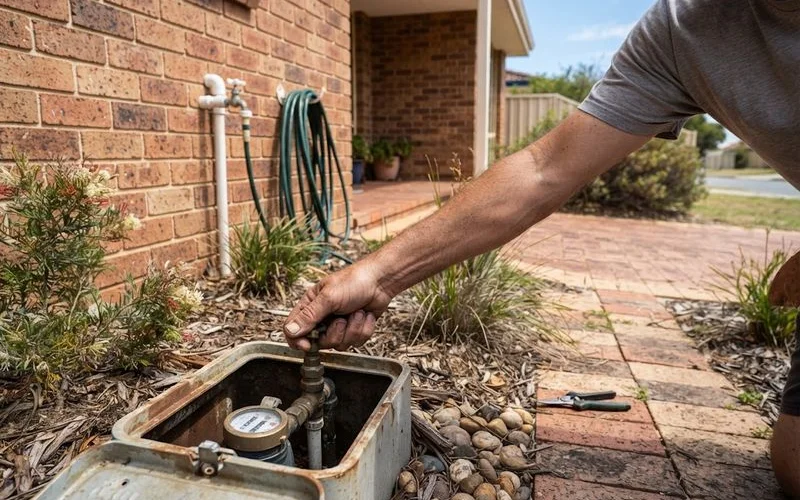
Your absolute first move is finding and shutting off the water supply, either at the isolation valve for the affected fixture if you know where it is, or at the main shut-off valve if the burst is more serious or you’re not sure of the source. Knowing the location of your mains shut-off before you ever need it is one of the single most useful things you can do, since searching for it mid-emergency costs precious minutes.
Step two: assess electrical safety
If water is pooling anywhere near power points, switches, or electrical appliances, and you can safely reach your switchboard without walking through standing water, switch off power to the affected area. If reaching the switchboard means stepping through water, don’t attempt it. Leave that to a professional and focus on containing the water instead.
Step three: limit the damage
Once the water’s off, move valuables, furniture and anything electrical away from the affected area. Towels, buckets and anything absorbent can help contain the spread while you wait for the plumber. If water has reached a ceiling, watch for bulging or sagging, which can indicate water pooling above and a risk of the ceiling giving way.
Step four: call a plumber
With the water off and the immediate risk contained, call an emergency plumber. Describe what you’re seeing clearly, including whether the pipe is exposed or hidden behind a wall or under the slab, since this affects how quickly they can assess and fix it. If you’ve managed to stop the water flow yourself, the job may no longer need to be treated as an emergency-rate callout, which can save you money if it’s genuinely safe to wait for a standard booking.
| Time | Action | Why it matters |
|---|---|---|
| Immediately | Shut off water at the isolation valve or mains | Stops the damage from getting worse |
| Within a minute | Check electrical safety near the water | Prevents a secondary hazard |
| Next few minutes | Move valuables, contain the spread | Limits damage while you wait |
| Once contained | Call a plumber, describe the situation clearly | Gets the right response, possibly at a lower rate |
What usually causes a pipe to burst
Understanding the common causes helps you spot early warning signs next time. Ageing galvanised or corroded pipe is one of the more frequent culprits in older Perth homes, since internal corrosion weakens the pipe wall over years until it finally gives way. Ground movement during Perth’s hot, dry summers can also stress buried pipework, particularly on reactive clay soils. Sudden pressure spikes, a fitting that was never quite tightened properly, or simple age on poly pipe fittings round out the usual causes. None of these are things you can always predict, but a plumber inspecting the burst can usually tell you which applied, and whether nearby sections of pipe are at similar risk.
After the immediate crisis
Once the plumber has assessed and repaired the burst, ask for a written report describing the cause and extent of the damage, which is useful if you’re making an insurance claim. Photos of the damage before cleanup starts are also worth taking for the same reason.
Once the immediate repair is done, don’t assume the story ends there. Water damage from even a short burst can linger in wall cavities, under flooring, or in ceiling spaces, and mould can start developing within days in Perth’s warmer months if the area isn’t dried out properly. Ask the plumber whether the affected area needs professional drying or moisture testing, and keep an eye on the space over the following weeks for any musty smell or visible staining that suggests moisture is still trapped somewhere out of sight.
To find a plumber who can respond quickly to a burst pipe in Perth, our emergency plumbing category ranks local operators using our published scoring methodology, and the full plumber directory covers other trades if needed.
Frequently asked questions
- Where is the water mains shut-off valve usually located in a Perth home?
- It's commonly near the water meter at the front boundary, or sometimes at a tap near an outside wall of the house. It's worth locating and testing yours before an emergency, since fumbling to find it while water is flowing wastes valuable time.
- Should I turn off electricity if a burst pipe is near power points?
- If water is pooling near electrical outlets, switches or appliances, and you can safely reach your switchboard without stepping through water, switching off power to the affected area is a sensible precaution. If reaching the switchboard means walking through water, don't risk it, and wait for a professional instead.
- Can I fix a burst pipe myself temporarily?
- For copper or PVC pipe, a temporary clamp or repair sleeve can sometimes slow a leak until a plumber arrives, but this isn't necessary or always safe, and shutting off the water supply is the priority over attempting a fix.
- Is burst pipe damage covered by home insurance?
- Many home and contents policies cover water damage from a sudden burst pipe, though the pipe repair itself isn't always included. Check your specific policy wording, and keep a report or invoice from the plumber to support any claim.