
Getting ready for Perth's wet season: gutter and downpipe maintenance
By Julian Fischer · Updated 2026-09-04
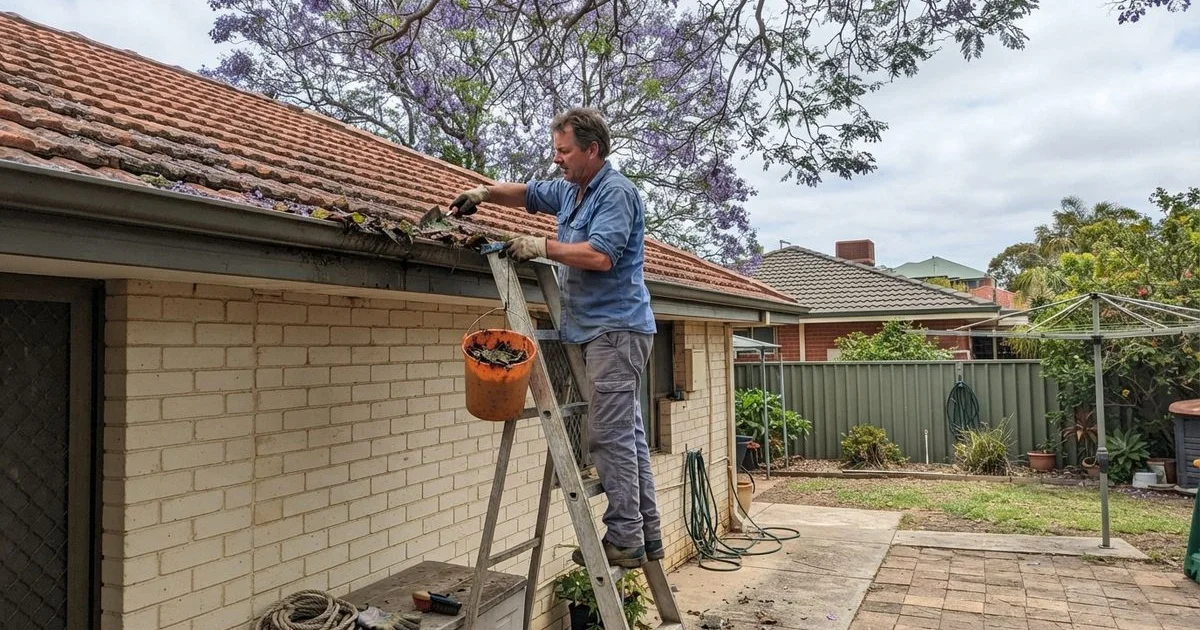
Perth’s wet season has a way of finding every weakness in a gutter system that’s been quietly neglected all year. A bit of maintenance beforehand is one of the cheapest ways to avoid water finding its way into your roof cavity, walls, or foundations when the rain actually arrives.
Why this matters more than people expect
Gutters that are blocked or damaged don’t just look messy, they stop doing their actual job, which is moving water away from your roofline and foundations. Overflowing gutters can send water running down external walls, pooling near foundations, or backing up under roof tiles or sheeting, none of which are cheap problems to fix once they’ve been happening unnoticed for a season or two.
A practical pre-wet-season checklist
- Clear leaves and debris. Remove built-up leaves, twigs and dirt from gutters and check that downpipes aren’t blocked at the entry point.
- Check the fall. Water should flow toward the downpipes, not pool in low spots. Standing water after a light rain is a sign the fall isn’t right somewhere along the run.
- Look for rust, holes or sagging. These indicate the gutter itself needs repair or replacement, not just a clean.
- Check gutter brackets and fascia. Loose brackets or a rotting fascia board behind the gutter can cause sagging even if the gutter itself is otherwise fine.
- Test downpipe flow. Run water through with a hose if you can, to confirm it’s actually reaching the ground or stormwater connection without blockage.
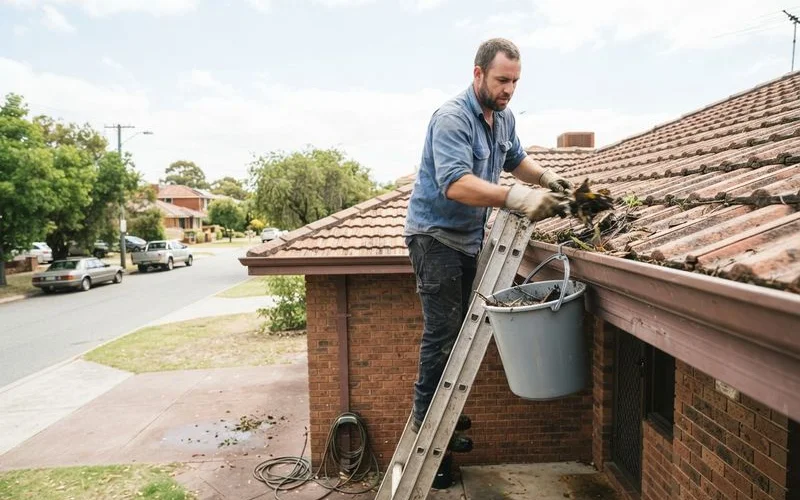
When to call a plumber instead of doing it yourself
Ground-level, single-storey gutter clearing is a reasonable DIY task for many homeowners, done carefully with a stable ladder. Once you’re dealing with a steep roof, second storey access, or you’ve spotted actual damage like sagging, rust or gutters pulling away from the house, it’s safer and often cheaper long-term to bring in a plumber who can assess whether it’s a maintenance job or a repair.
| Sign | What it suggests | DIY or professional |
|---|---|---|
| Leaves and light debris | Routine seasonal buildup | DIY on single storey, careful ladder use |
| Water pooling after light rain | Fall issue somewhere in the run | Professional assessment |
| Rust, holes or visible corrosion | Gutter material failing | Professional repair or replacement |
| Sagging or pulling away from fascia | Bracket or fascia issue | Professional assessment |
Don’t forget the stormwater connection
Gutters and downpipes are only half the system. Check where your downpipes discharge, whether that’s into a stormwater drain, a soakwell, or across the ground, and confirm that connection point isn’t blocked with leaves, sediment or a collapsed soakwell that’s stopped absorbing water properly. A gutter and downpipe that are perfectly clear won’t help much if the water has nowhere to go once it reaches ground level, and a blocked or failing stormwater connection is one of the more overlooked causes of pooling around foundations during heavy rain.
Making it a habit
Doing this check annually, ideally in the lead-up to the wet season, catches small issues while they’re still cheap to fix. Leaf guard mesh can reduce how often you need to clear debris, particularly for homes under established trees, though it doesn’t remove the need for an occasional check altogether.
It’s worth pairing the gutter check with a quick look at your roof itself while access is already sorted, since loose or lifted tiles and sheeting are often spotted incidentally during gutter work and are far cheaper to fix before the first heavy downpour than after water has already found its way in. A five-minute walk around the property after the check, looking for anything obviously out of place along the roofline, rounds out a proper pre-wet-season once-over without adding much time to the job.
To find a Perth plumber for a gutter inspection or repair, our roofing and gutter plumbing category ranks local operators using our published scoring methodology, and the full plumber directory covers other trades if needed.
Frequently asked questions
- How often should gutters be cleared in Perth?
- It depends heavily on nearby trees. Homes with established trees overhanging the roof often need clearing once or twice a year, while properties with little tree cover may go longer between clears. A check before the wet season is a sensible minimum for most Perth homes.
- Can I clear my own gutters, or is this a job for a plumber?
- Clearing loose leaves and debris from ground-accessible gutters on a single-storey home is something many people do themselves, carefully and with the right ladder safety. Anything involving a steep roof, a second storey, or actual damage or sagging is safer left to a professional.
- What are the signs my gutters need more than just a clean?
- Sagging sections, water overflowing during rain rather than draining through the downpipes, visible rust or holes, and gutters pulling away from the fascia all suggest a repair or replacement issue, not just a debris clear.
- Does leaf guard mesh mean I never need to check my gutters again?
- No. Leaf guard reduces how often you need to clear them, but it doesn't eliminate maintenance entirely, since fine debris and dust can still build up over time, particularly under trees that drop smaller matter like gum leaves or seed pods.