
Installing a new gas appliance in Perth: what to expect and what to check
By Julian Fischer · Updated 2026-07-25
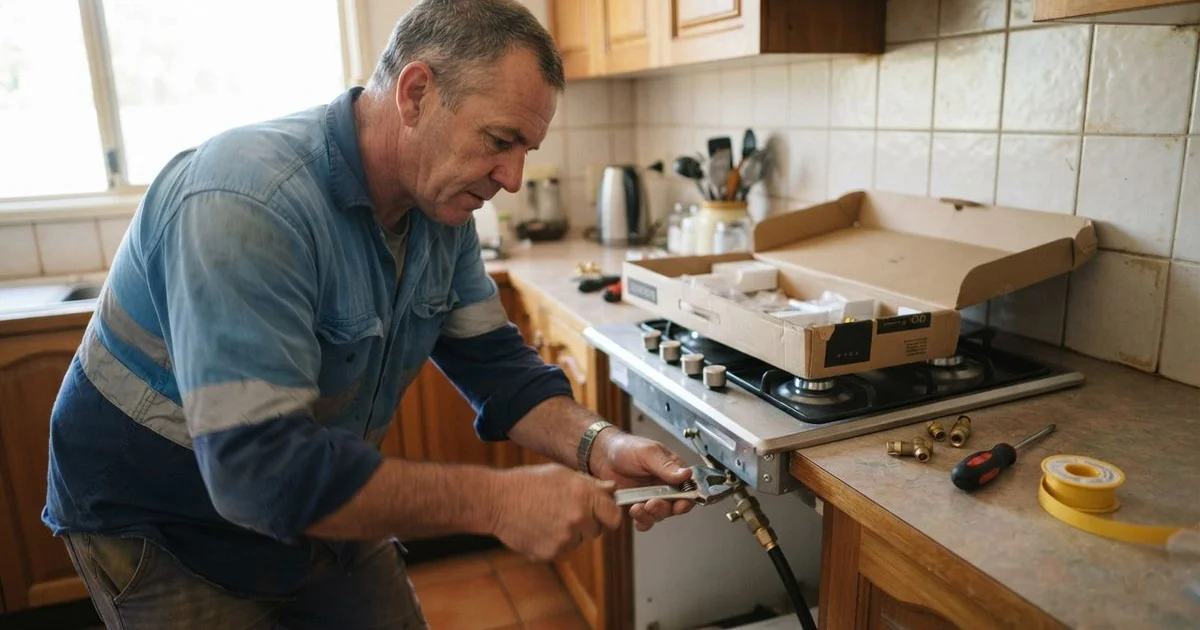
Whether you’re finally getting that outdoor kitchen gas point installed or swapping an old electric cooktop for gas, the process runs through a licensed gas fitter from start to finish. Here’s what actually happens and what’s worth checking before you book.
The type of job changes everything
Not all gas installations are equal, and the scope makes a real difference to both timing and cost:
- Connecting an existing appliance (a cooktop, heater or similar) to an existing gas point is the simplest job, often finished same day.
- A new gas point for an appliance that doesn’t currently have a connection needs new pipework run from the existing line, which takes longer depending on distance and access.
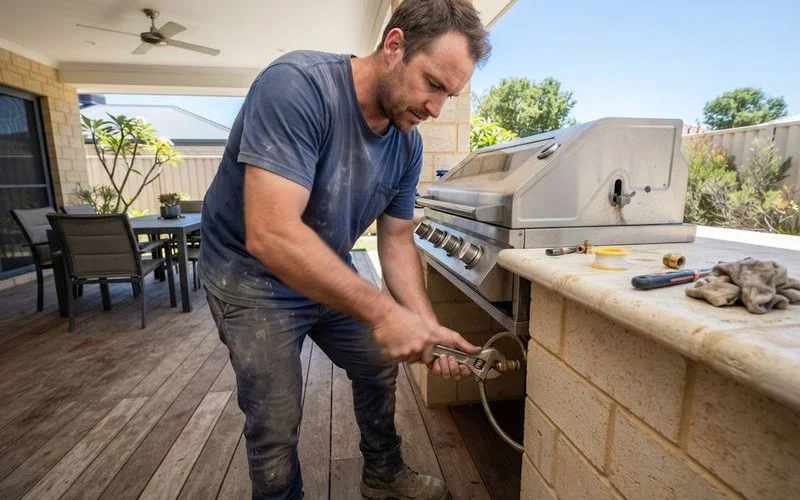
- Outdoor BBQ or gas line work often means running pipe outside the building envelope, which can involve trenching depending on the layout.
- Full house gas reticulation, such as for a renovation or extension, is the biggest scope and usually needs proper planning alongside other trades.
What to expect on the day
A licensed gas fitter will first confirm the appliance is compatible with your gas type and existing supply, then plan the pipe run if it’s a new connection. For straightforward appliance swaps, this is quick: isolate the gas, disconnect the old appliance, connect the new one, then pressure test the line to check for leaks before it goes live. For new gas points, expect the fitter to route pipework through walls, ceilings or underground depending on the appliance location, which is where distance from the existing gas line has the biggest effect on time and cost.
Once the appliance is connected and tested, the gas fitter checks the appliance is operating correctly, whether that’s flame colour and heat output on a cooktop or proper ignition and safety cut-off on a heater. If the appliance in question is a gas hot water system rather than a cooktop or heater, the hot water system replacement guide walks through the extra steps specific to that job.
Compliance is not optional
Every gas installation in WA needs to be signed off with a gas compliance certificate once the work is finished. This isn’t paperwork for its own sake: it confirms the installation was tested and meets Australian Standards, and it matters later if you make an insurance claim or sell the property. Only ask for quotes from businesses holding current gas fitting licensing, and confirm they’ll provide this certificate as part of the job, not as an optional extra.
| Job type | Typical scope | What affects timing |
|---|---|---|
| Appliance connection | Swap or connect to existing gas point | Appliance type, access |
| New gas point | New pipework from existing line | Distance, whether walls or ceiling need opening |
| Outdoor BBQ/gas line | Pipe run to an outdoor fixture | Trenching, distance from house |
| Full reticulation | Whole-house gas planning | Coordination with other trades, scale of build |
Checking the appliance itself, not just the connection
Before booking installation, it’s worth confirming the appliance is genuinely suited to your household: the right gas type (natural gas or LPG, since they’re not interchangeable without conversion), the correct size or output for the space, and whether it needs any clearance from walls or cabinetry that your current layout may not have. A gas fitter can flag compatibility issues before the job starts, but knowing your appliance’s specifications when you call for a quote saves a wasted trip if it turns out not to suit your setup.
Getting a fair quote
Ask what the quote covers: is it appliance connection only, or does it include any wall or ceiling work needed to route new pipe? Distance from your existing gas line is one of the biggest single factors in price, so measuring roughly how far the new point needs to travel before you call helps you sense-check any quote you receive. Treat any cost figures you see elsewhere as general guidance, since a gas fitter needs to see your site to confirm the final price and compliance requirements.
To compare licensed operators for this kind of work, our gas installation service category ranks Perth businesses using our published scoring methodology. The broader plumber directory covers related trades if your project spans more than gas fitting.
Frequently asked questions
- Can I connect a gas appliance myself if it's just plugging it in?
- No. Gas fitting is licensed work in WA regardless of how simple the connection looks, because a small mistake can create a leak. Always use a licensed gas fitter for any new connection or appliance swap.
- How long does a new gas point installation take?
- Connecting an existing appliance is often a same-day job. Running a completely new gas point, especially if it needs to travel a distance from the existing line or through walls, takes longer and may need more than one visit.
- Do I need paperwork after a gas appliance is installed?
- Yes. A licensed gas fitter issues a gas compliance certificate confirming the installation meets WA safety standards. Keep this on file, since it can matter for insurance and if you sell the property later.
- Does outdoor BBQ or gas line work cost more than an indoor appliance connection?
- It can, particularly if the line has to run a longer distance outside or requires trenching. Distance from the existing gas point is one of the bigger cost factors for any new connection, indoor or outdoor.