
What to expect when you get your hot water system replaced in Perth
By Julian Fischer · Updated 2026-07-19
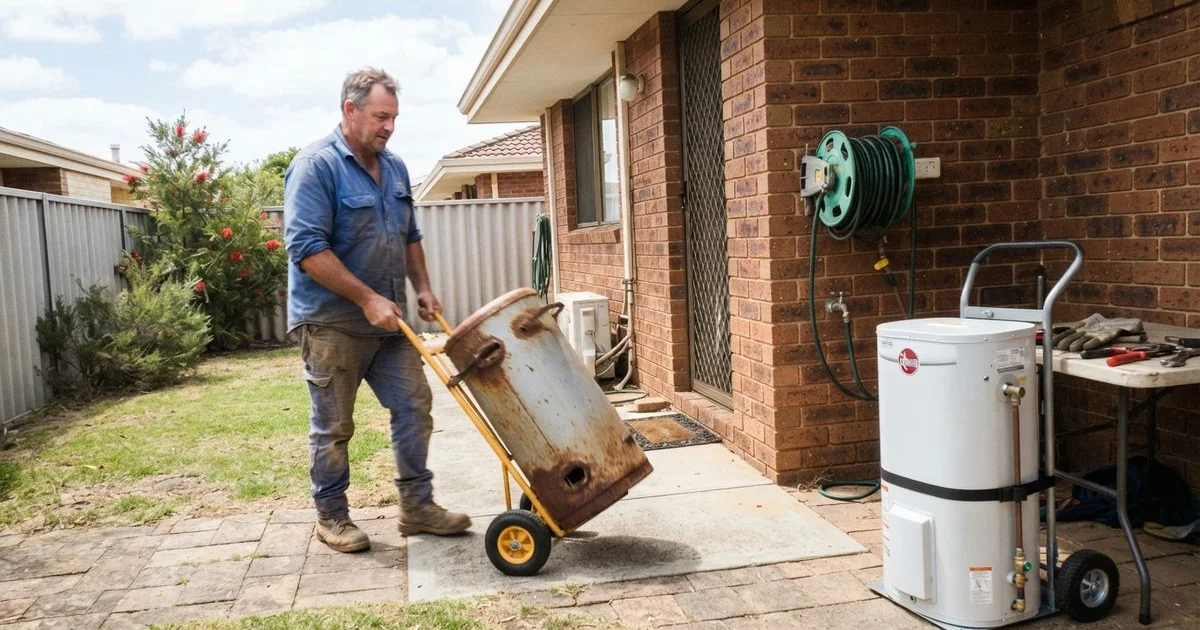
A hot water system rarely fails at a convenient time, and once it’s clear a repair isn’t going to cut it, most homeowners want to know exactly what happens next. The process is fairly standard across Perth, whether you’re swapping like for like or changing system type entirely.
Before the job: assessment and choice
A plumber typically starts by looking at your existing setup: the type of system, its age, where it sits, and what it connects to. If you’re replacing like for like, this step is quick. If you’re considering a change, such as moving from a gas storage tank to a heat pump or continuous flow system, the plumber will check whether your existing connections, gas supply or electrical capacity can support the new unit, since not every system swaps in without extra work.
Household size and usage matter here too. A unit sized for two people won’t keep up with a family of five, and going too large wastes energy and money on a system that’s oversized for actual demand.
What happens on installation day
- Isolate and drain. The plumber shuts off water (and gas or power, depending on system type) and drains the old unit before disconnecting it.
- Remove the old system. The existing unit is disconnected and removed from site.
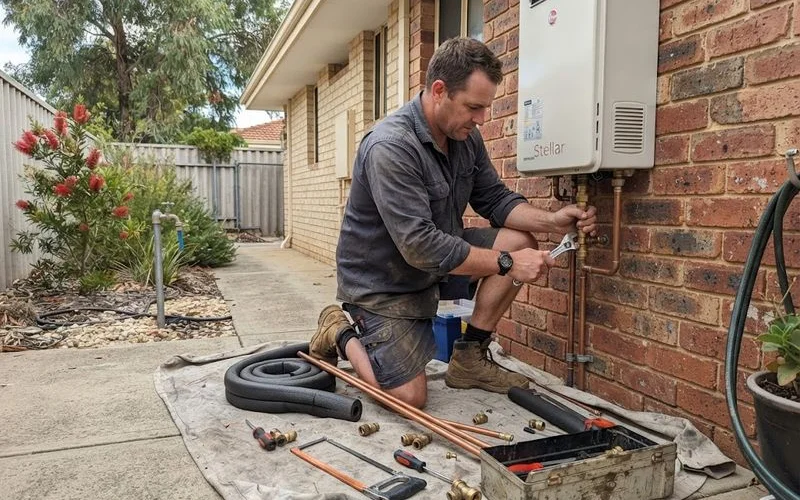
- Position and connect the new unit. If it’s going in the same spot, this step is quick. Relocating the unit or upgrading its size takes longer and may need new pipework or a larger base.
- Test and check pressure. The plumber tests for leaks, checks water pressure and temperature, and confirms the system is delivering hot water safely.
- Compliance and handover. For gas systems in particular, the plumber needs to issue compliance documentation once the work is done, which in WA typically includes confirming a compliant tempering valve is fitted, and should walk you through any new controls before leaving.
Questions worth asking before you commit
Ask whether the quote is for a like-for-like swap or includes any upgrade work, what warranty covers the unit versus the installation labour, and whether the plumber will handle disposal of the old system. It’s also worth asking how they’ll protect your property during the job, particularly if the unit is in a tight space like a roof cavity or a narrow side passage.
| Stage | What to expect | Typical timing |
|---|---|---|
| Assessment | Plumber reviews existing setup and household needs | Same visit or a separate quote visit |
| Removal | Old unit disconnected and taken away | First part of install day |
| Installation | New unit connected, tested for leaks and pressure | Bulk of install day |
| Compliance and handover | Certification issued, controls explained | End of install day |
Choosing between system types
If your old system has failed and you’re weighing whether to replace like for like or switch types, it helps to know the broad trade-offs. Electric and gas storage tanks are the most common and generally the cheapest to install, but they store a fixed volume of hot water that can run out during heavy use. Continuous flow (or instantaneous) systems heat water on demand and never run out, but flow rate matters if multiple taps run hot water at once. Heat pump and solar systems cost more upfront but run more cheaply over time, which suits households planning to stay put for years. A plumber can talk through which suits your household size, usage patterns and budget rather than defaulting to whatever was there before.
A note on cost and warranty
Replacement cost varies with system type, size and whether the installation is a straight swap or involves relocation, so treat any figure you see elsewhere as a starting point rather than a fixed price for your home. Keep your installation paperwork and warranty details somewhere safe, since most manufacturer warranties require proof of professional installation to be honoured. Before you commit to a system type, it’s worth checking whether a rebate or payment plan changes the maths; our hot water rebates and payment plans guide covers what’s currently available in WA.
To compare Perth plumbers who specialise in this work, our hot water systems category ranks local operators using our published scoring methodology. You can also browse the full plumber directory if your job touches more than one trade.
Frequently asked questions
- How long does a hot water system replacement take?
- A straightforward like-for-like swap, same type and same spot, is usually finished in half a day. Relocating the unit, upgrading the size, or switching system types (say from electric storage to gas continuous flow) can take longer and may need extra site work.
- Do I need to be home for a hot water replacement?
- Yes, at least for the initial assessment and the handover at the end, since the plumber needs access to the property and you'll want to be shown how to operate any new controls or settings.
- Will I be without hot water during the job?
- For most of the working day, yes. A good plumber will tell you roughly how long the water will be off so you can plan around it, and same-day jobs are the norm for a standard replacement.
- What happens to the old unit?
- A licensed plumber will disconnect and remove the old system as part of the job, including safely handling anything that needs specific disposal, like certain older tank types.
Related on this site
- Browse hot water systems providers
- Scalding and hot water safety: why tempering valves matter in WA homes
- Free and low-cost help with hot water systems in WA: rebates and payment plans
- What actually happens when a plumber clears a blocked drain
- Installing a new gas appliance in Perth: what to expect and what to check
- All guides →