
What actually happens when a plumber clears a blocked drain
By Julian Fischer · Updated 2026-07-22
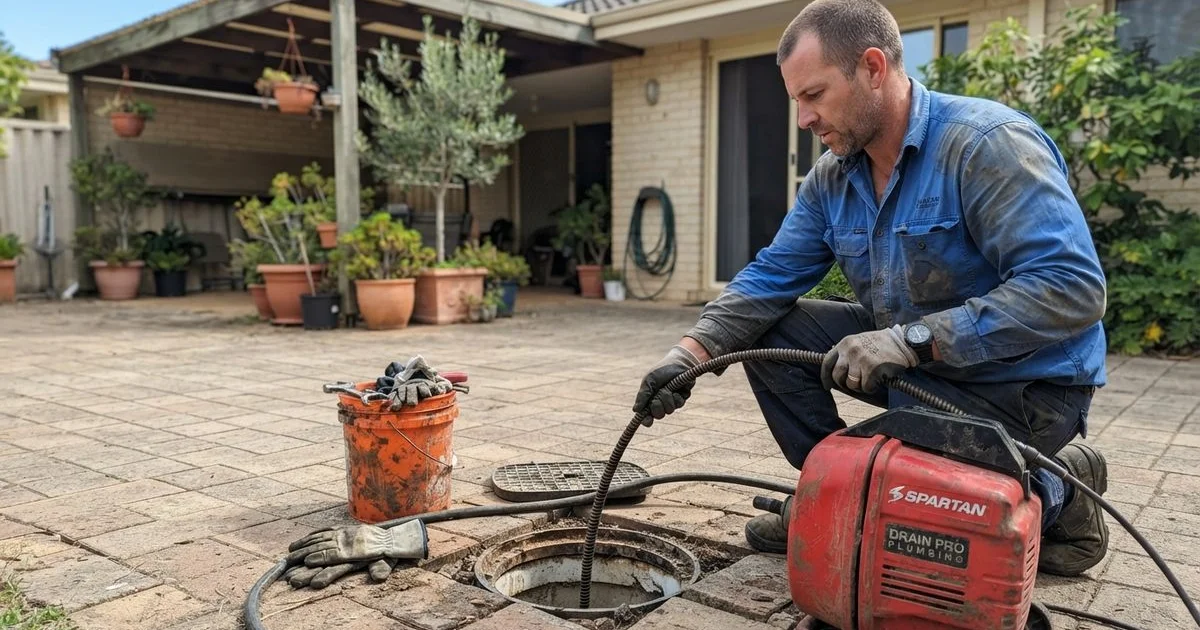
A blocked drain is one of those jobs that looks the same from the outside, whether it’s a five-minute fix or the first sign of a bigger problem underground. Knowing what a plumber actually does once they arrive helps you understand what you’re paying for and what questions are worth asking.
Step one: working out what’s actually blocked
A good plumber starts with questions before touching any equipment: which fixtures are affected, whether it’s one drain or several, how long it’s been happening, and whether it’s gotten worse recently. Multiple fixtures backing up at once, like a toilet, shower and laundry all draining slowly together, points to a blockage further down the line rather than a single fixture problem, and changes how the job is approached from the start.
Step two: clearing the blockage
For straightforward blockages, a plumber typically starts with the least invasive method and escalates only if needed:
- Manual or electric eel. A rotating cable is fed into the pipe to physically break up and remove the blockage, effective on hair, grease buildup and tree root intrusion in accessible sections.
- High-pressure water jetting. Water jets scour the inside of the pipe, useful for grease buildup and general debris along a longer run of pipe.
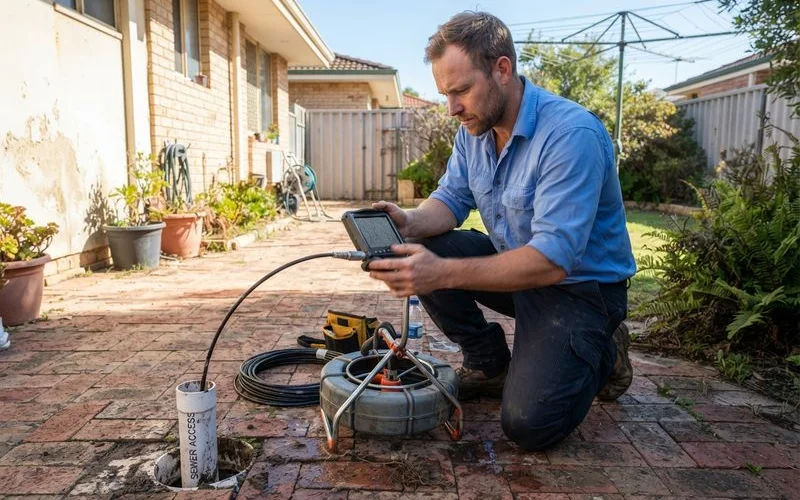
- CCTV camera inspection. For recurring problems or main line blockages, a waterproof camera is fed into the pipe so the plumber can see exactly what’s causing the issue, whether that’s roots, a cracked joint, or a collapsed section, rather than guessing.
Older Perth suburbs with established trees and ageing clay pipe are more prone to root intrusion at pipe joints, which is one of the more common causes of a blockage that keeps coming back even after clearing.
When it’s more than a simple clear
If a camera inspection turns up a cracked, collapsed or badly root-damaged section of pipe, clearing the blockage alone won’t stop it happening again. In that case, the plumber may recommend pipe relining, which repairs the pipe from the inside without full excavation, or in more serious cases, digging up and replacing the damaged section. This is a bigger job and cost than a standard clear, so a plumber should show you the camera footage and explain why the extra work is needed rather than just adding it to the invoice.
| Method | Best for | Notes |
|---|---|---|
| Electric eel | Single fixture blockages, hair and grease | Fastest, least invasive |
| High-pressure jetting | Longer pipe runs, grease buildup | Pipe condition should be checked first |
| CCTV inspection | Recurring blockages, main line issues | Confirms exact cause before further work |
| Relining or excavation | Cracked or collapsed pipe found on camera | Only needed once damage is confirmed |
Reducing how often it happens
While some causes of a blockage, like root intrusion in older clay pipe, are largely out of your control, a few habits reduce how often you’re dealing with this problem. Avoid putting fat, oil or grease down kitchen sinks, since it solidifies inside the pipe as it cools. Use drain strainers to catch hair and food scraps before they enter the system. And for homes with established trees near older drainage, an occasional preventative jet clean can clear early root growth before it becomes a full blockage. None of this eliminates the need for a plumber entirely, but it does stretch out the time between callouts. Leaving a blockage too long isn’t just inconvenient: our guide to the health risks of a blocked drain covers when a slow drain becomes more than a plumbing problem.
What good service looks like
Reviewers across Perth drain listings consistently flag two things: whether the plumber actually diagnosed the cause rather than just clearing symptoms, and whether pricing was explained clearly before any extra work started. A plumber who offers to show you the camera footage, rather than just telling you what they found, is generally a good sign.
To see Perth specialists ranked on exactly these factors, our drain and blocked drains category uses our published scoring methodology based on rating, review volume, recency and sentiment. You can also browse the wider plumber directory for related trades.
Frequently asked questions
- Will the plumber always use a camera to check my drain?
- Not for every job. A simple, obvious blockage like a sink trap full of hair might just need a manual or electric snake. A camera comes into play for recurring blockages, main line issues, or when the plumber needs to see exactly what's causing the problem before recommending a fix.
- Is jetting safe for older pipes?
- A competent plumber will assess pipe condition before using high-pressure jetting, since very old or already-cracked pipes can be damaged by full-pressure water. This is one reason a camera inspection often comes before jetting rather than after.
- How do I know if the blockage is actually fixed?
- Water should drain freely with no gurgling for weeks afterward, not just immediately after the visit. Ask the plumber what caused the blockage and whether it's likely to come back, since a proper fix addresses the cause, not just the symptom.
- Why did the plumber recommend relining instead of just clearing the blockage?
- Relining is usually suggested when a camera inspection shows a cracked, collapsed, or root-damaged section of pipe rather than just debris buildup. Clearing the blockage alone won't stop it recurring if the pipe itself is damaged.
Related on this site
- Browse drain & blocked drains providers
- Best drain & blocked drains in Perth metro →
- Sewage and blocked drains: the health risks of leaving it too long
- What to expect when you get your hot water system replaced in Perth
- Installing a new gas appliance in Perth: what to expect and what to check
- All guides →